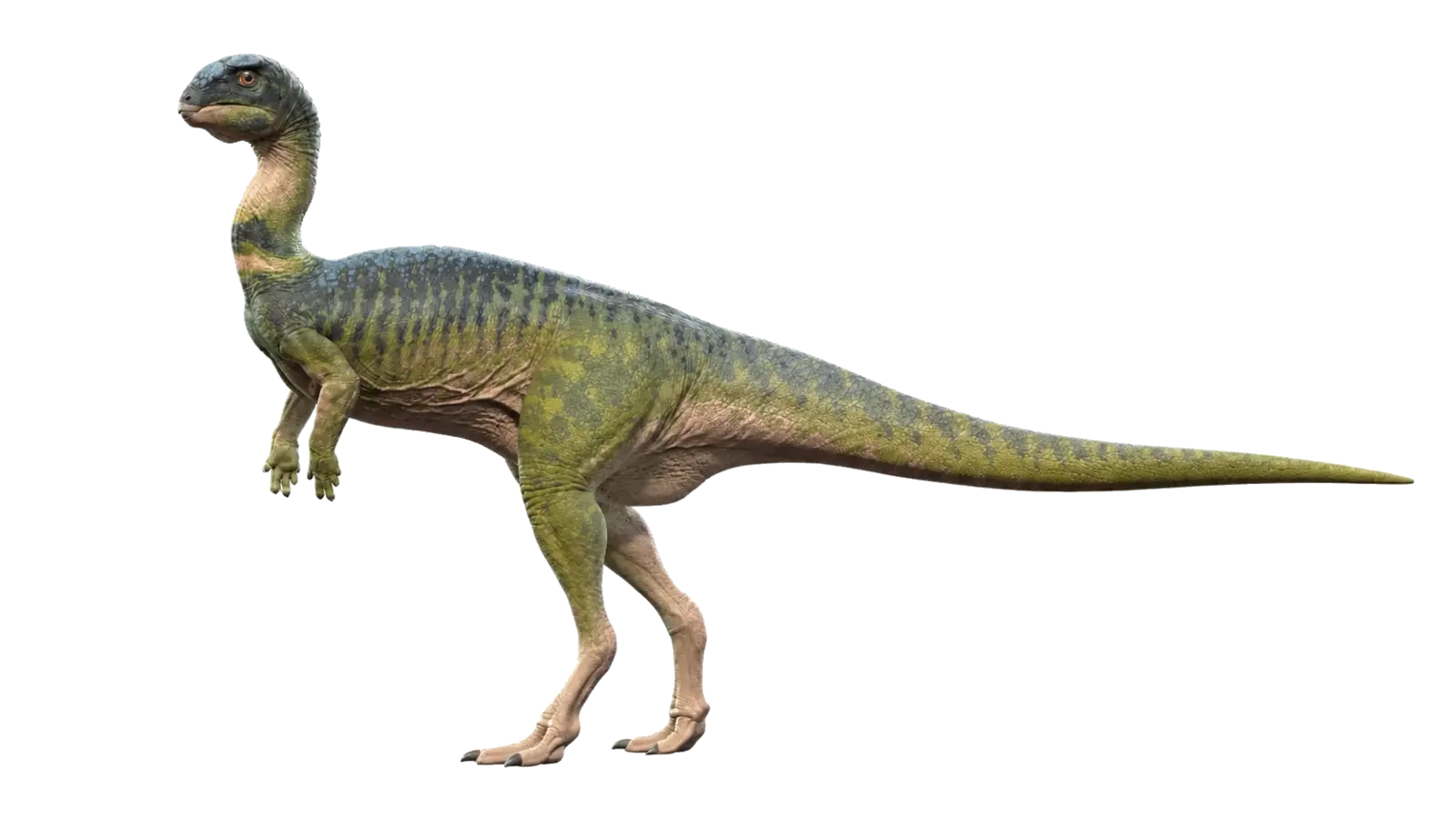
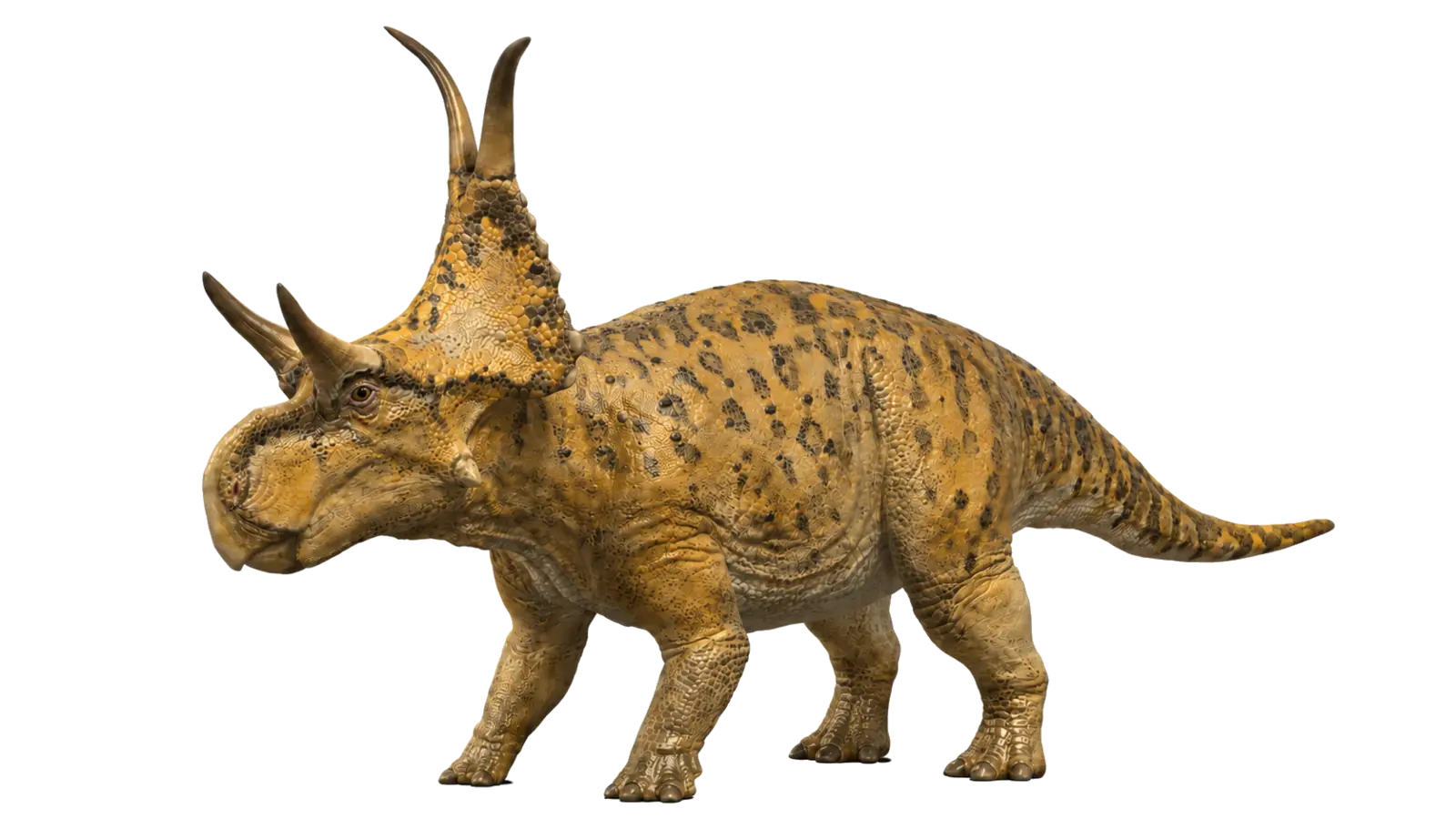
Overview and gameplay loop
Hold the horn line. Turn with the herd.
Diabloceratops works best when the herd holds its front together. Use rocks or trees to cover one direction, face the threat with your horns and spar when an opening appears. Coordinate turns while moving so you do not expose your back.
+Dangerous front arc
+Strong spar and stagger
+Excellent in a group
−Vulnerable on the flanks
−Cannot outrun a pack easily
−Loses value when the head points the wrong way
Special abilities and controls
Verified against the current ability set in patch 0.21.772. Shown keys are defaults; players with custom binds should check Settings → Controls.
Combat and unique abilities
A basic horn attack that becomes a mass-based shove or knockdown while running.
Shove allies or knock down and stun a valid target; every attack consumes one attack charge.
A longer animation that reaches low targets and carries value comparable to the alternate attack.
Lower your head to strafe and reduce head damage. Press SPACE plus a direction to escape tangled horns.
The dots below stamina are attack charges. With no charge left, the next attack consumes stamina; each dot returns in roughly 30 seconds.
Survival and environmental interactions
Stand near rock or trees to close one flank
Migration supplies the main diet
Avoid deep mud while a pack is chasing
Wallow before leading the herd through a high-traffic area
EInteractWallow at a mud pool to reduce tracks and scent for a while.
QScentScent while standing still to read water, diet, carcasses, tracks and distant zones.
GCarcass interactionCorpse handling: tap to tear off a chunk; hold to drag or carry it when mass allows.
HRestRest / safe logout: rest out of sight; never lie on a trail or directly between others and water.
All basic controls +
Use SHIFT to sprint and Z to switch trot or walk for tighter turns.
Hold longer for greater range; tap Q to open the compass.
Eat, drink, wallow, use nests and interact with resources.
Tap to tear off a chunk; hold to drag or carry a valid object.
Rest for faster recovery; hold H to sleep and log out safely.
View growth, diet, mutations, sex, group and asset location.
Broadcast · friendly · threaten · help. Loud calls reveal your position.
Use N to pair or place a nest; B builds a mound nest for supported species.
Damage by ability
Actual damage also depends on mass, hitbox, attack direction, bleed and server balance. The table separates fixed values from scaling abilities to avoid treating community figures as absolute damage.
Community reference for Headbutt; actual results still vary with mass, hitbox and server balance.
Running Shove scales with target state, mass, speed or contact conditions; use the listed value as a reference rather than guaranteed damage.
Downward Headbutt scales with target state, mass, speed or contact conditions; use the listed value as a reference rather than guaranteed damage.
Recommended mutations
This list is the species-wide foundation. After choosing a build below, follow its dedicated loadout order instead of keeping the general priority.
Improves fracture resistance in heavy combat.
Redirects part of incoming damage pressure into stamina.
Improves the chance of dislodging a pouncer.
Improves recovery between combat rotations.
Two builds & detailed guides
Choose the role you want to play in this life. These are EFG tactical recommendations, not universal meta builds for every matchup.
Frontline
Hold the herd's front line.
Keep the horns outward and the body connected to formation; the frontline loses value the moment it chases away from the herd.
Choose in order from 01 → 04
Prioritize the first mutation in the list. If it is unavailable or slot-limited, use the next option and check again at the next milestone.
Converts part of incoming damage into stamina loss; limited to Slot 2.
SLOT LIMIT · Slot 2 onlyImproves fracture resistance, especially in heavyweight matchups.
Improves the chance for herbivore kicks to dislodge pouncers.
Improves bleed resistance during trades or pack pressure.
TACTICAL GAMEPLAY LOOP
Visit Sanctuary and fill the mushroom diet.
Block the rear with terrain → keep the horns toward danger → spar when the opponent commits → rotate the herd together.
Keep the horns outward and the body connected to formation; the frontline loses value the moment it chases away from the herd.
CONDITIONS FOR THIS BUILD
↗Stand near rock or trees to close one flank
↗Migration supplies the main diet
+The herd needs a frontline that prevents opponents from splitting angles.
+Strong spar and stagger
−Vulnerable on the flanks
−Cannot outrun a pack easily
NOTE: A build guides decisions; it does not replace reading hitboxes, stamina, team numbers and server-specific settings.
Duelist
Spar and duel one-on-one.
Manage spar and stamina one exchange at a time; disengage before the defensive resource is exhausted.
Choose in order from 01 → 04
Prioritize the first mutation in the list. If it is unavailable or slot-limited, use the next option and check again at the next milestone.
Improves fracture resistance, especially in heavyweight matchups.
Speeds up health regeneration and reduces downtime.
Converts part of incoming damage into stamina loss; limited to Slot 2.
SLOT LIMIT · Slot 2 onlyImproves the chance for herbivore kicks to dislodge pouncers.
TACTICAL GAMEPLAY LOOP
Follow Migration while staying outside the crowded center.
Block the rear with terrain → keep the horns toward danger → spar when the opponent commits → rotate the herd together.
Manage spar and stamina one exchange at a time; disengage before the defensive resource is exhausted.
CONDITIONS FOR THIS BUILD
↗Avoid deep mud while a pack is chasing
↗Wallow before leading the herd through a high-traffic area
+You are in a duel with enough stamina to manage spar one exchange at a time.
+Dangerous front arc
−Cannot outrun a pack easily
−Loses value when the head points the wrong way
NOTE: A build guides decisions; it does not replace reading hitboxes, stamina, team numbers and server-specific settings.
Mutation names, unlock conditions and effects may change with hotfixes. EFG prioritizes developer data; unclear items are treated as community recommendations and should be verified against the in-game description.
Growth time, mass and diet
Diabloceratops from 0% to 100%
Before Adult: one nutrient gives 100% growth speed, two give 200%, and all three give 300%. Diet does not speed up Elder ageing at 75–100%. The table assumes a 1× server.
Horned Melon, Coconut, Mango, Mountain Ash
Sumac, Chanterelle Mushroom, Fireweed, Radish Flower
Russula, Radish Root
Maintain α, β and γ together for 300% Growth. Each bar only needs a remaining value; when one reaches zero, speed immediately drops to the corresponding tier.
Prime stats for Diabloceratops
ADULT · 75%3,000 kg
→PRIME PEAK · ≈87,5%3,900 kg
ADULT · 75%34.2 km/h
→PRIME PEAK · ≈87,5%37.8 km/h
ADULT · 75%275
→PRIME PEAK · ≈87,5%316,25
Peak is the comparison point above. Prime usually rises from 75%, peaks around 87.5%, then enters Elder decline. Mass, speed and Bite Force use the Prime Peak value at roughly 87.5%; hotfixes may change these stats.
From first spawn to Prime
Visit Sanctuary and fill the mushroom diet.
Follow Migration while staying outside the crowded center.
Practice sparring with your own species before fighting carnivores.
At Prime, hold a formation of two to four with cover behind you.
Sanctuary juvenile
Perfect Diet
2 Migration
4 Patrol
Avoid negative mutations
Read the Prime guideDiabloceratops · Science & another perspective
Diabloceratops roughly means 'devil-horned face', named for the long horns on its frill.
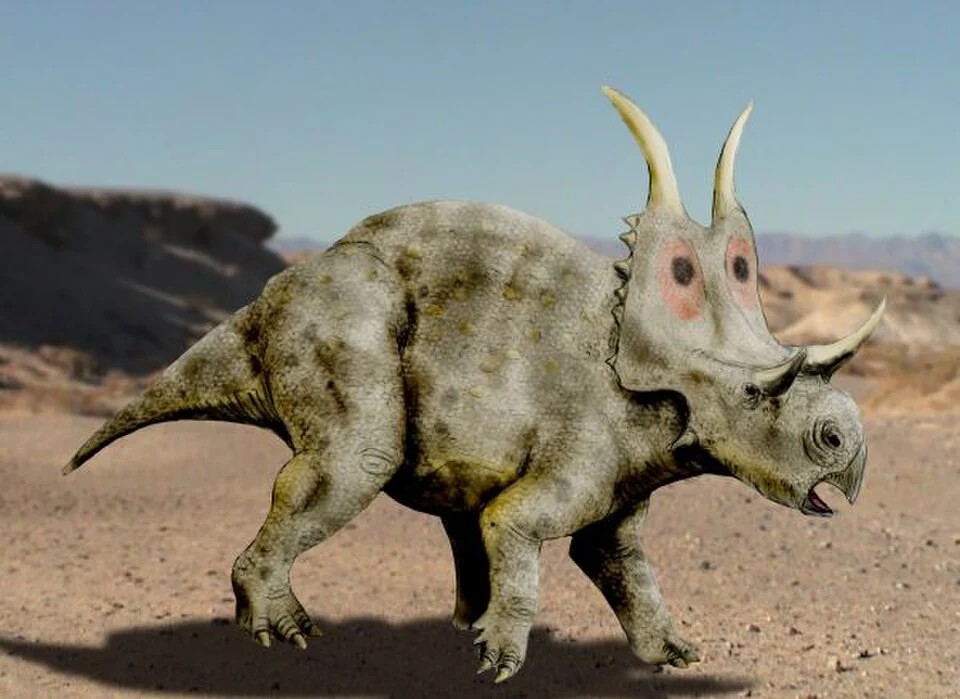
Reconstructing Diabloceratops
A Diabloceratops reconstruction by Nobu Tamura. The form reflects the artist’s interpretation of evidence; coloration and soft tissues should not be treated as a photograph of the living animal.
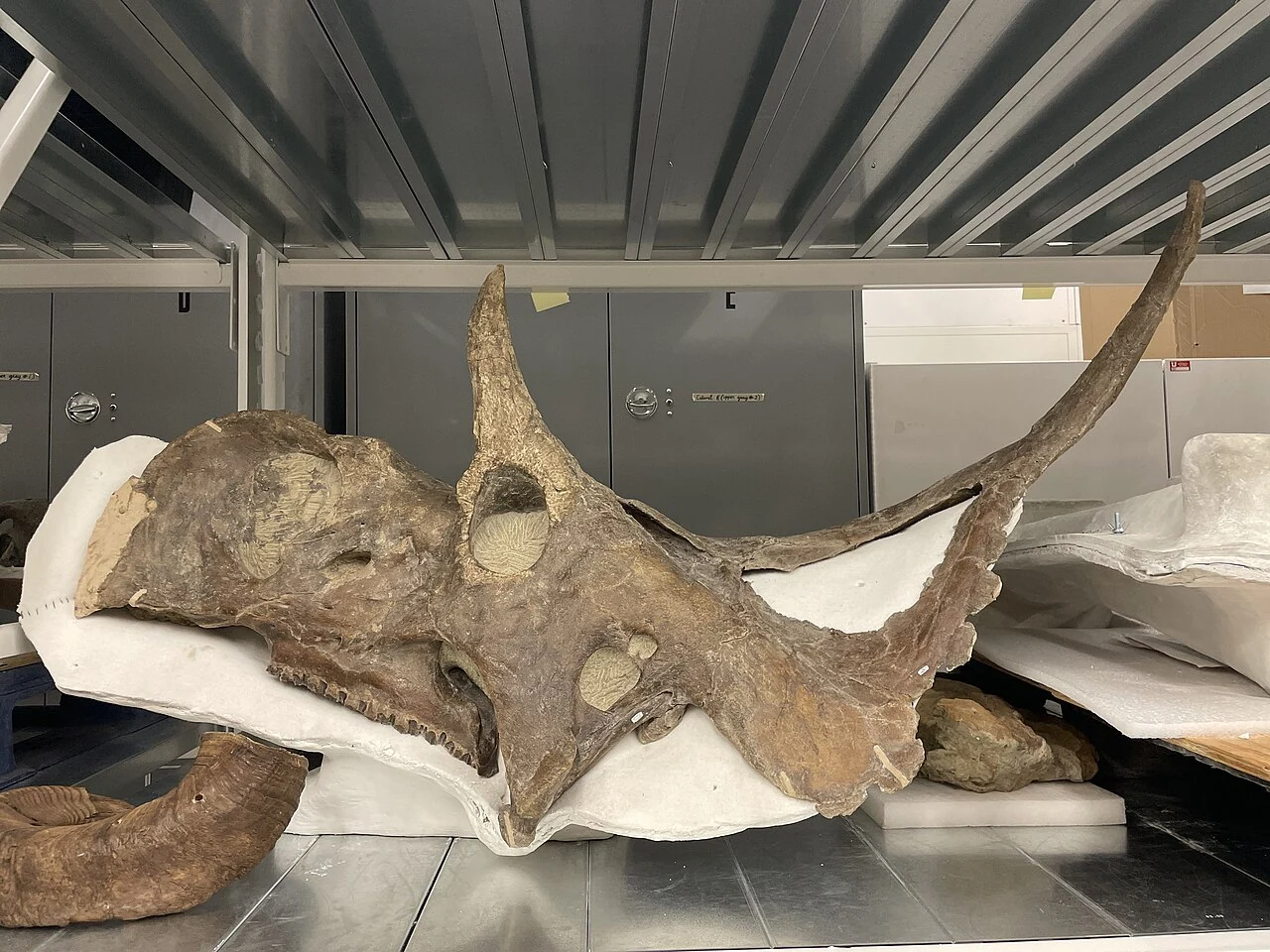
The horns on the frill
Nick Longrich's photograph of the Diabloceratops eatoni holotype skull. It documents horn and frill structure separately from EVRIMA's sparring mechanic.
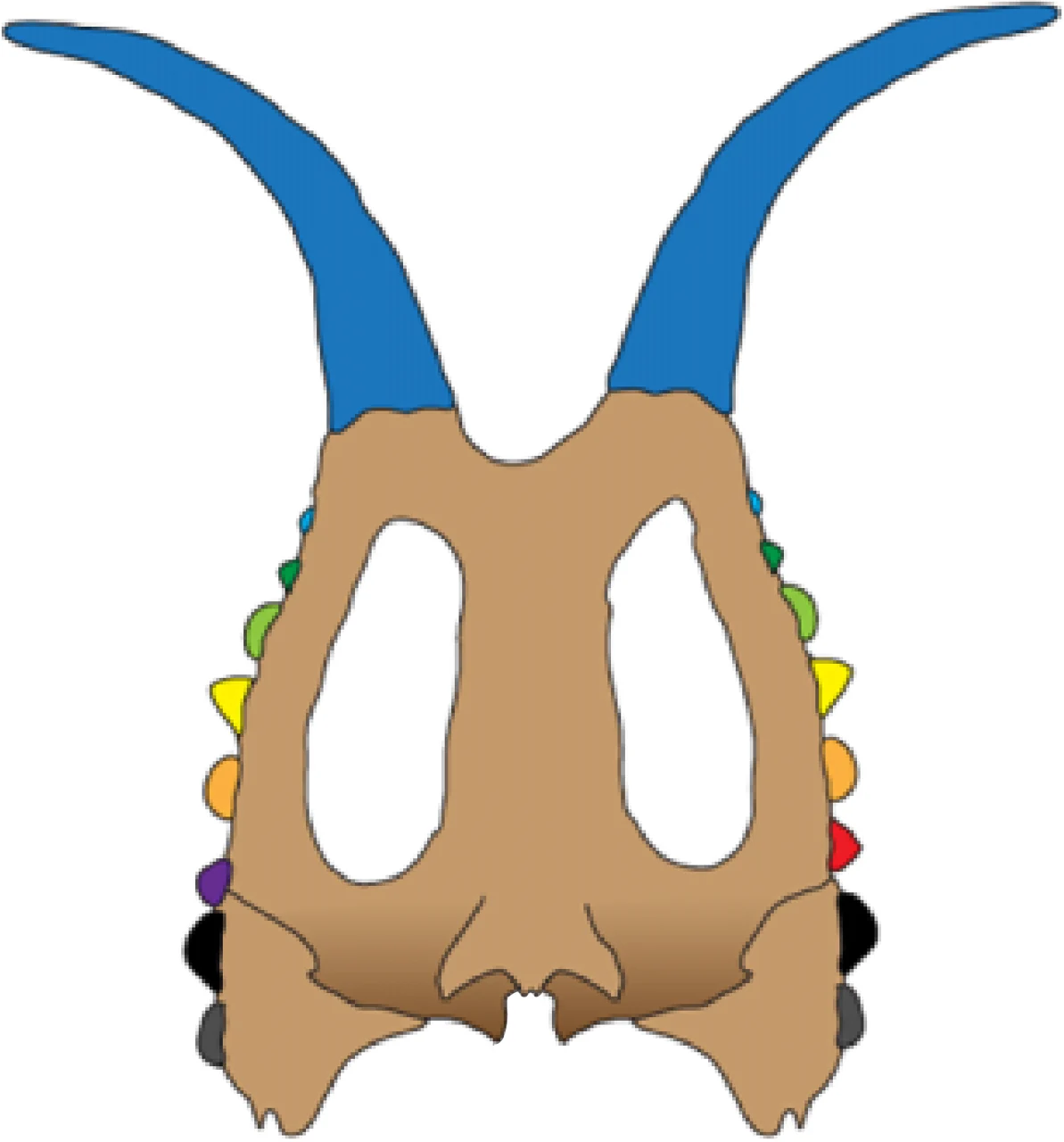
Reading the frill outline
Diabloceratops eatoni frill extracted from a comparative research figure. The colors are anatomical coding by the authors, not the animal's living colors.
It lived in Utah about 79 million years ago and belonged to an early North American ceratopsian branch.
EVRIMA sparring turns horn structure into a stance and front-control mechanic.